
Our History
Our Purpose
Our Tanent

-
History
1904History of The Apostolic Church
Welsh Revival (1904–1905)
In 1904–1905, Wales experienced a powerful spiritual revival that had a tremendous impact across many parts of the British Isles. This revival was followed by a mighty visitation of the Holy Spirit that spread simultaneously to many parts of the world. During this time, many believers received the baptism of the Holy Spirit with accompanying signs and manifestations.
As a result, Pentecostal groups began to emerge worldwide. These believers held firmly to the teaching that the fivefold ministry described in Ephesians 4:11—Apostles, Prophets, Evangelists, Pastors, and Teachers—should operate in the Church together with the nine gifts of the Holy Spirit outlined in 1 Corinthians 12:1–11.
From this movement, The Apostolic Church was officially established in 1915 in Penygroes, South Wales, United Kingdom.
The early vision of Apostolic doctrine deeply influenced the first leader of the fellowship, Apostle Daniel Powell Williams, who in 1913 was ordained as an Apostle in the Body of Christ. He later became the first President of The Apostolic Church Council and faithfully served until his passing in 1947.
At the same time, William Jones Williams was called as a Prophet and ordained into full-time ministry in 1913. Together with others, they demonstrated the New Testament offices of Apostle and Prophet in the United Kingdom. These ministries later spread to other nations and continents around the world.
Establishment of the Church in Ghana
In time, the Lord brought many Christian groups into fellowship with the Church in Penygroes under the name The Apostolic Church, and Ghana was no exception.
In the Gold Coast (now Ghana), many believers sought a deeper spiritual awakening. Their desire to grow in the truth led them to request Christian literature from various missions abroad.
Through contact with the Faith Tabernacle Church of Nigeria, a group of believers in Asamankese became introduced to The Apostolic Church. This group requested the Apostolic Church in Bradford, England to send a delegation to visit them.
In 1935, Pastor George Perfect, a British missionary stationed in Nigeria, was directed by the Missionary Office in Bradford to visit the group in Asamankese. He met the believers who were being led by Apostle Peter Newman Anim.
This group had already experienced the baptism of the Holy Spirit and required instruction and leadership. They later agreed to become members of The Apostolic Church and fully accepted the tenets of the Church.
Pastor George Perfect then ordained Pastor Peter Newman Anim as the first African Pastor of The Apostolic Church in the Gold Coast.
In 1936, Pastor Vivian Wellings, the Missionary Secretary in Bradford, visited the young church. After returning to England, he recommended that a resident missionary be sent because of the church’s rapid growth.
On March 2, 1937, Pastor James McKeown arrived in the Gold Coast as the first resident missionary. His wife, Sophia McKeown, joined him later that same year.
Shortly after his arrival, Pastor McKeown fell ill with malaria. A controversy arose when he was taken to the Ridge Hospital for treatment. Some members of the Faith Tabernacle group strongly believed only in divine healing and opposed medical treatment.
This disagreement eventually led to a split in 1938, with Pastor Anim and a group forming the Christ Apostolic Church.
Despite this separation, The Apostolic Church continued to grow rapidly across the country under the leadership of Pastor McKeown. Pastors such as R.S. Asomaning, J.A.C. Anaman, J.A. Bimpong, D.K. Boateng, and S.K. Frimpong supported the work.
In 1944, believers in Accra invited The Apostolic Church to establish a congregation there. The church in Accra grew rapidly, and by 1984 the national headquarters was moved to Accra.
Over the years, several missionaries from England came to support the work including:
- Pastor C. B. Sercombe (1943)
- Pastor Adams McKeown (1944)
- Pastor Albert Seaborne (1946)
- Pastor S. M. Hammond (1948)
- Pastor H. L. Copp (1953)
- Pastor C. H. Rosser (1962)
- Pastor F. Johnson (1966)
- Pastor P. W. Cawthorne (1971)
- Pastor E. H. Williams (1973)
Over time, some branches of the church developed independently, including the Church of Pentecost, Divine Healers Church, Apostolic Reformed Church, and New Covenant Apostolic Church. Many of these churches later came into fellowship under the umbrella of the Ghana Pentecostal Council.
Today, The Apostolic Church has over 1,500 local congregations in Ghana and has helped establish churches in countries such as Togo, Benin, Burkina Faso, Côte d’Ivoire, and the United States of America.
In 1985 the church celebrated its Golden Jubilee. During that same year, the church attained autonomy, and Apostle A. Ofori-Addo became the first Ghanaian President of the church.
Establishment of the Church in North America
During the late 1980s and early 1990s, some Ghanaian believers in New York were worshipping in a predominantly African church known as the United African Brotherhood (UAB).
Following internal disagreements within the church, a group of believers separated and began meeting as a prayer fellowship dedicated to the teachings of the Bible.
Key leaders of this fellowship included:
- Elder David Owusu Asimeng
- Philip Duah
- Mac Otchere
- Elijah Addae
- Pastor Edward Okyere
- Deacon Nana Osei Tutu
- Deacon Dumfeh
- Sister Perpetual Acheampong
- Sister Juliana Kusi Dansoh
- Sister Constance Asiedu
As the fellowship continued to grow, the members sought affiliation with The Apostolic Church in Ghana. This led to discussions with the President of the church, Apostle Peter Attah Antwi.
In August 1993, the National Council sent Apostle Ebenezer Abebrese and Apostle Victor Boafo to the United States to meet with the fellowship.
After their visit and prayerful discussions, the group decided to affiliate with The Apostolic Church of Ghana. The name “The Apostolic Church International” was adopted for the churches established in North America.
In November 1993, Apostle Victor Boafo was appointed the first missionary and National Superintendent for North America.
Superintendents of North America
- 1993 – 2004: Apostle Victor Boafo
- 2002 – 2006: Apostle Ebenezer Abebrese
- 2006 – 2008: Apostle Joseph O. Boateng
- 2009 – 2012: Apostle Ben Lomotey
- 2012 – 2016: Apostle Samuel K. Awidi
- 2016 – 2019: Apostle Dr. Kwabena D. Akufo
- 2022 – Present: Senior Minister Pastor Daniel Quartey
Church Pastors
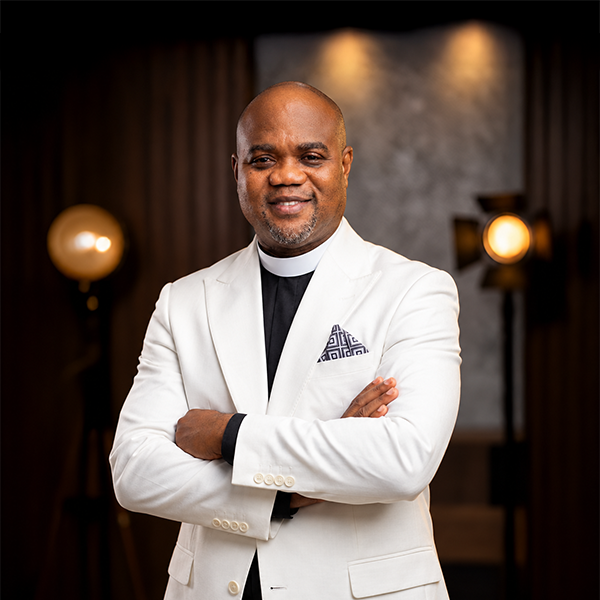
Apostle Daniel Quartey
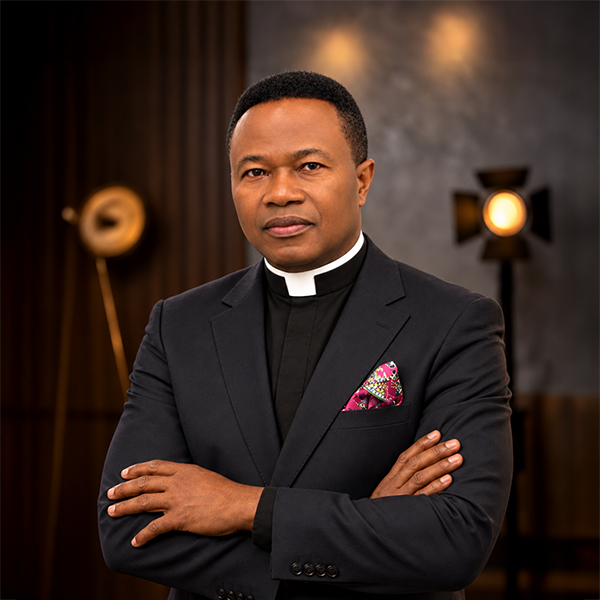
Apostle Steven Assifuah